Decision-Making Under Pressure – Why Intelligence on the Football Field Often Looks Invisible
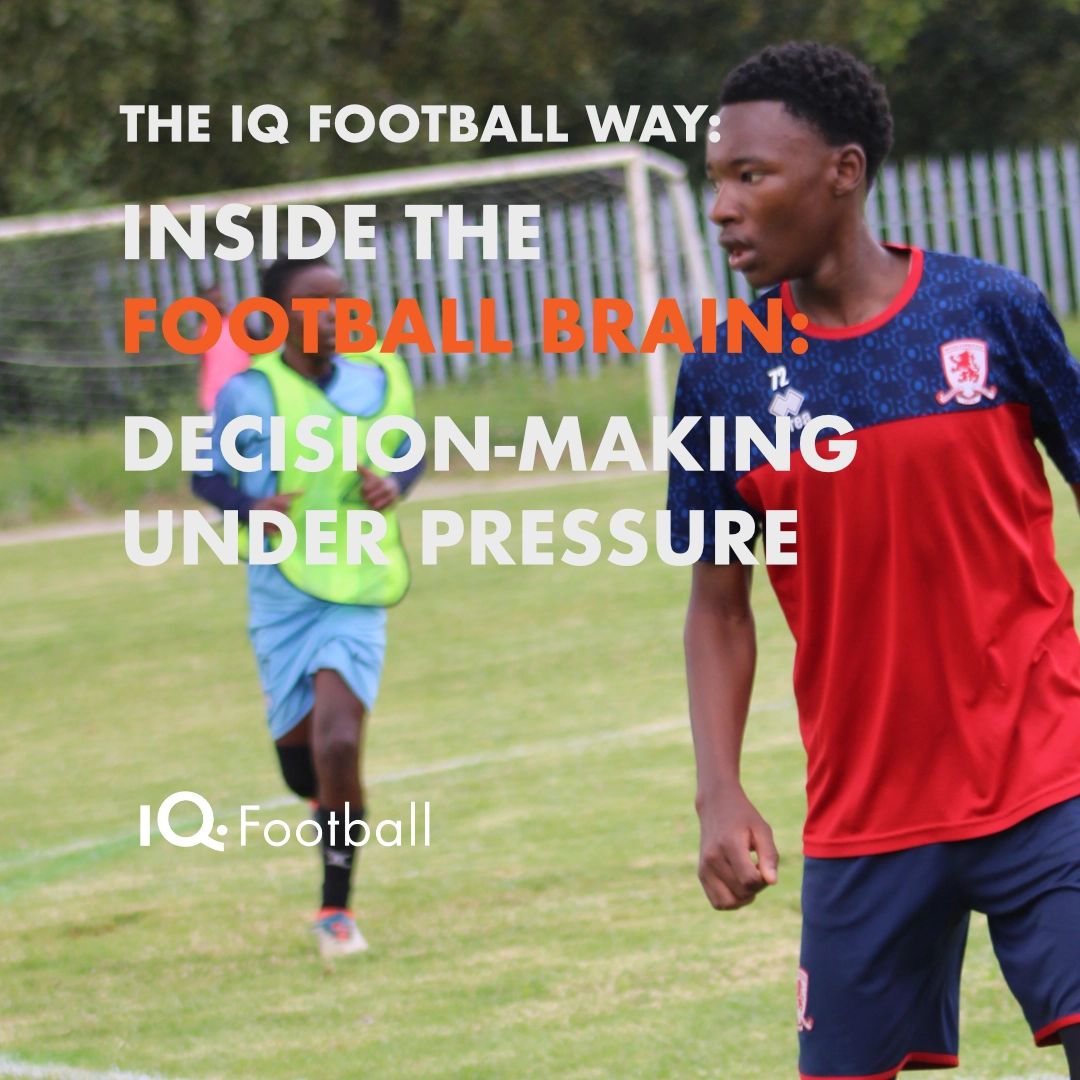
Some of the smartest football players do not look flashy. They do not always dribble past five defenders, they do not always sprint the fastest, and they are not always the loudest player on the pitch. Yet somehow, they always seem to be in the right place, choosing the right option at the right time.
Elite football intelligence is not about memorising movements. It is about making fast, adaptable decisions under pressure. The best players are constantly solving problems in real time. Their brains are continuously asking questions such as: Where is the space? What is the defender doing? What will happen next? Should I pass, carry, scan again, or wait? Football is a decision-making game long before it is a technical game.
Why Good Decisions Look Effortless
Great decision-makers make football appear simple. This is because the brain of an experienced player learns to process patterns quickly and efficiently. Neuroscientists sometimes call this chunking, which refers to the brain grouping familiar movements, shapes, and situations together so that decisions can happen faster.
Experienced players are not consciously thinking through every movement in detail. Instead of thinking, “Should I move my left foot here, turn my hips, then pass there?”, their brains begin recognising patterns almost instantly. They notice pressure arriving from the blind side, a teammate making a third-man run, or space opening behind a pressing defender before others even realise it.
This allows the player to act quickly and calmly. What looks effortless is often the result of repeated exposure to football situations, attention training, scanning habits, emotional regulation under pressure, and adaptable game experience. The brain becomes more efficient because it has seen similar situations many times before.
A beautiful example of this is Luka Modrić. Modrić was never known as the biggest or fastest player on the field. In fact, as a child, he was often overlooked physically. Yet his ability to scan early, stay calm under pressure, and manipulate space made him one of the most intelligent midfielders of his generation.
When you watch him play, it often looks effortless. He receives under pressure, escapes tight spaces with one touch, slows the game down, speeds it up at the perfect moment, and chooses the right pass before defenders can react.
What appears “simple” is actually elite perception and decision-making happening at incredible speed inside the brain. That is why true football intelligence cannot be developed through isolated drills alone. Players need rich, unpredictable environments where the brain is constantly solving problems.
Time, Space & Choice: The Brain’s 3 Questions
Every football action is shaped by three invisible questions the brain is constantly trying to answer.
1. How much TIME do I have?
Pressure changes everything. A player with two seconds on the ball can scan, rotate, and create, while a player with half a second must react instantly. The brain continuously measures pressure speed, opponent distance, and body positioning to estimate how much time is available.
Young players who struggle under pressure are often not “bad decision-makers.” Their brains may simply still be learning how to process information quickly enough.
Players like Luka Modrić are exceptional because they seem to create extra time where none exists. Their early scanning and calm nervous systems allow them to make decisions before pressure fully arrives.
2. Where is the SPACE?
Football intelligence depends heavily on spatial awareness. Elite players constantly scan for open passing lanes, defensive gaps, teammate positioning, and dangerous spaces before receiving the ball. The best players often scan before they receive the ball, allowing the brain to prepare a decision early. This reduces cognitive load once pressure arrives.
Instead of reacting late, they are already one step ahead. One of Modrić’s greatest strengths has always been his relationship with space. He rarely waits for pressure to trap him. Instead, he subtly shifts his body position early so he can receive facing the next action.
That tiny adjustment changes everything for the brain because it provides more visual information, creates more passing options, reduces panic, and allows for faster decisions.
3. What is the best CHOICE?
This is where emotion, experience, and perception collide. Under pressure, the brain does not always choose the technically “perfect” option. Instead, it often chooses the option it feels safest performing.
This is why fear matters in football. A stressed or anxious brain tends to rush decisions, panic clearances, force passes, avoid creative risk, and lose awareness of teammates. When players feel psychologically safe, calm, and confident, the brain can access more flexible and creative solutions.
Decision-making is not just tactical. It is deeply neurological and emotional. One reason Modrić has remained elite into his later years is because his game relies heavily on perception and decision-making rather than athleticism alone. His calmness under pressure allows his brain to continue accessing quality choices even in chaotic moments.
Why Slower Kids Often Become Smarter Players
Many intelligent young footballers are overlooked because they appear physically slower. However, slower external movement does not always mean slower thinking internally. Some children naturally observe more before acting, analyse patterns carefully, prefer prediction over chaos, and need extra moments to organise information. Over time, these players often develop exceptional positioning, anticipation, scanning habits, timing, and tactical understanding.
In youth football, early physical speed can hide poor decision-making because a fast child may escape pressure through athleticism alone. But as the game becomes faster and more complex with age, pure athletic advantages begin to reduce. Eventually, the players who survive are usually the ones who recognise patterns early, stay calm under pressure, make efficient decisions, conserve energy intelligently, and understand space deeply.
Luka Modrić is a powerful reminder that football intelligence can outweigh physical dominance. His career demonstrates how anticipation, awareness, and decision-making can control games at the highest level. Football history is full of players who were not physically dominant children but became brilliant decision-makers later because their brains learned the game at a deeper level.
Training Decision Speed Without Rushing
One of the biggest mistakes in coaching is constantly shouting, “FASTER! QUICKER! ONE TOUCH!” Speed without perception creates panic. The goal is not rushed football. The goal is efficient perception. The brain becomes faster when players learn to scan earlier, recognise patterns, predict pressure, stay emotionally regulated, and experience repeated game-like situations.
Good neurofootball training develops decision speed through constraints rather than commands. For example, smaller spaces increase pressure perception, overloads create scanning demands, directional games improve anticipation, touch limits change timing decisions, and transition games increase cognitive flexibility.
These environments force the brain to adapt naturally. The player gradually learns when to slow down, when to accelerate, when to recycle possession, and when to attack space quickly. If you watch Modrić closely, you will notice something important: he rarely looks rushed. Even in chaos, he often appears calm because his brain has already processed the picture before the ball arrives.
That is the true goal of intelligent football training. The aim is not panic speed, but calm speed. True football intelligence is not robotic speed. It is the ability to stay calm enough to see clearly while the game moves fast around you.
How IQ Football Uses Neurofootball Training to Develop Decision-Makers
At IQ Football, we believe that intelligent football is developed through the brain as much as the body. Our neurofootball approach is built around a player-centred model that is designed to help players become calmer, more adaptable, and more aware under pressure. Instead of training children to memorise robotic movements, we create environments that challenge perception, attention, scanning, emotional regulation, and decision-making in real football situations.
This means players are constantly learning how to recognise space earlier, process pressure faster, adapt to unpredictable situations, regulate emotions during chaos, and make better decisions in real time. Rather than simply teaching players what to do, we aim to develop players who can figure out what to do independently. This is an important difference.
Football is unpredictable. No two moments are ever identical. Because of this, players need brains that can adapt rather than simply repeat rehearsed patterns. At IQ Football, our player-centred model recognises that every child develops differently. Some players learn through movement, some through observation, some through repetition, and others through exploration and creativity. Our role as coaches is not simply to control players, but to guide environments that allow intelligent behaviour to emerge naturally.
Many of our exercises use constraints-based training, where the environment itself teaches the player. Smaller spaces, overloads, transition games, directional play, scanning tasks, and pressure-based activities all encourage the brain to solve problems naturally. These training environments help players improve attention and focus, scanning habits, anticipation, emotional control, timing, spatial awareness, and decision-making speed.
Over time, players begin to slow the game down mentally, even when the game around them is moving quickly. This is one of the reasons players like Luka Modrić appear so calm under pressure. Their brains have learned how to process information efficiently before panic takes over.
At IQ Football, we want children to develop this same kind of intelligent perception. We believe football training should not only produce better athletes, but also better thinkers, problem-solvers, and self-aware young people. When the brain learns to process the game more effectively, intelligence on the field becomes visible.
Final Thought
The smartest football players are often invisible to untrained eyes. But underneath every calm touch, disguised pass, or perfectly timed movement is a brain processing pressure, emotion, space, timing, prediction, and choice all at once.
Football is not just played with the feet. It is played through perception, attention, emotion, and decision-making. When we begin training the brain, not just the body, intelligence on the field becomes visible.
adaptability, calm decision-making, Decision-making, football intelligence, pressured decision-making
